A well-designed yard can make a home feel more inviting, comfortable, and complete. Outdoor spaces are no longer viewed only as areas that need mowing or occasional cleanup. Many homeowners now use their yards for entertaining, relaxing, gardening, exercising, and spending time with family. Because of this, improving a yard should involve more than adding a few plants or replacing worn furniture. The best results come from considering how the entire property functions and how each upgrade will affect future maintenance.
Before beginning any project, think about what is working and what is causing frustration. Some homeowners may struggle with standing water, bare patches, overgrown trees, or dark walkways. Others may simply want a more attractive layout or a safer place for children and pets. Creating a list of priorities can make the process less overwhelming and help prevent unnecessary spending. It is also useful to separate urgent repairs from decorative improvements.
Yard upgrades do not need to happen all at once. A thoughtful, phased approach can produce excellent results while allowing homeowners to manage costs and make informed decisions. By addressing structural and maintenance concerns first, then adding visual features, homeowners can create an outdoor space that remains attractive, practical, and enjoyable throughout the year.
Start With a Complete Assessment of Your Outdoor Space
Before purchasing plants or scheduling construction, walk through the entire property and take detailed notes. Pay attention to sunlight, shade, slopes, soil conditions, drainage patterns, traffic areas, and existing features. Observe the yard at different times of day, especially after heavy rain. These observations can reveal problems that may not be obvious during dry or mild weather.
A professional landscape design can help turn these observations into a cohesive plan. Rather than treating each part of the yard as a separate project, a full design considers how pathways, lawns, patios, planting beds, drainage systems, and lighting should work together. It can also help homeowners choose materials and plants that match the property’s architecture and local climate.
Homeowners should also identify which existing features are worth preserving. Mature plants, healthy trees, established walkways, and usable patios may be incorporated into the new layout. Keeping valuable features can reduce costs and prevent the yard from feeling completely stripped or unfinished during renovations.
For major projects, consulting a landscaping contractor may help homeowners avoid costly mistakes. An experienced professional can evaluate soil conditions, access limitations, underground utilities, drainage concerns, and installation requirements. This is especially important when projects involve excavation, retaining walls, irrigation changes, or large quantities of material.
After the assessment is complete, divide the work into phases. Projects that affect drainage, access, or underground systems should usually happen first. Lawn, plant, and decorative upgrades can follow. This sequence reduces the risk of damaging completed work when heavier construction begins later.
Improve Lawn Health Before Making Major Changes
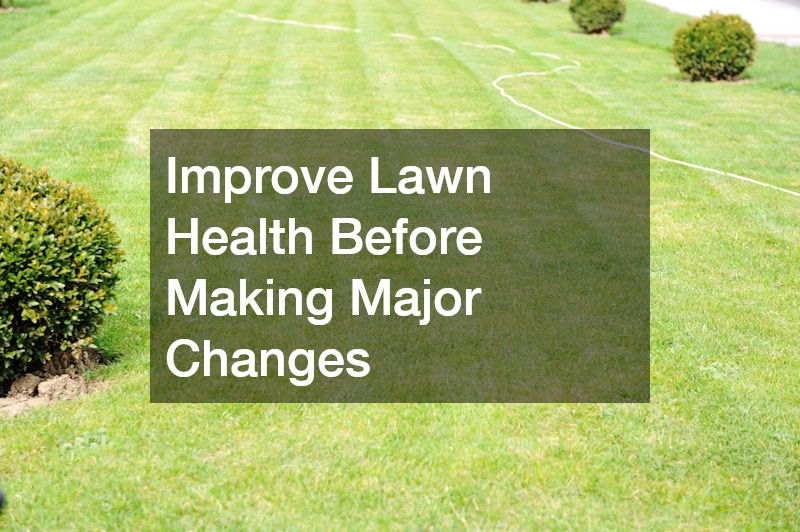
A healthy lawn creates a clean foundation for the rest of the yard. However, not every damaged lawn needs to be completely replaced. Homeowners should first determine why the grass is struggling. Common causes include compacted soil, poor drainage, insufficient sunlight, pest activity, improper watering, and unsuitable grass varieties.
When damage is limited, aeration, overseeding, fertilization, or soil improvement may be enough to restore the area. Large bare sections or widespread decline may require a more complete solution. Sod installation services can provide faster results than growing a lawn from seed, especially when homeowners want immediate coverage or need to control erosion. Fresh sod can also create a more uniform appearance, but the soil must be properly prepared before installation.
Preparation usually includes removing old vegetation, loosening compacted soil, correcting the grade, and adding appropriate amendments. Skipping these steps can cause the new turf to develop the same problems as the previous lawn. Homeowners should also choose a grass variety suited to the area’s sunlight, temperature, rainfall, and expected foot traffic.
Reliable watering is essential during lawn establishment and long-term care. Routine sprinkler maintenance can identify broken heads, clogged nozzles, leaks, uneven coverage, or incorrect spray patterns. Even a small irrigation problem can create dry patches in one area and excessive moisture in another. Water that reaches sidewalks, driveways, or walls is also wasted and may contribute to staining or structural issues.
Seasonal adjustments can make irrigation more efficient. Lawns generally need less water during cool or rainy periods and more during hot, dry weather. Watering deeply but less frequently often encourages stronger root growth than short daily watering. Early morning is usually the best time because temperatures are cooler and evaporation is lower.
Homeowners should inspect the lawn regularly after improvements. Changes in color, texture, density, or growth can provide early warnings of irrigation, nutrient, or pest problems. Addressing these concerns quickly can prevent small issues from spreading across the yard.
Add Lighting That Enhances Safety and Outdoor Living
Outdoor lighting can dramatically improve how a yard looks and functions after sunset. It helps people move safely between entrances, patios, driveways, and garden areas while making outdoor spaces more usable in the evening. Thoughtful lighting can also highlight architectural details and create a welcoming atmosphere without making the property feel overly bright.
The first priority should be areas where visibility affects safety. Steps, uneven walkways, gates, pool surrounds, and changes in elevation should be easy to see. Entry points and frequently used paths also need consistent illumination. Fixtures should be positioned to provide useful light without shining directly into people’s eyes or nearby windows.
Landscape lighting can also be used to emphasize attractive features. Uplighting may draw attention to mature trees, textured walls, or architectural details. Downlighting can create a softer effect that resembles natural moonlight. Small fixtures placed near flower beds, water features, or sculptures can add depth and make the yard feel more polished.
Homeowners should avoid placing too many fixtures in one area. A combination of brighter task lighting and softer accent lighting usually produces better results than uniform brightness throughout the property. Darker areas between illuminated features can create contrast and make the lighting design more visually interesting.
Low-voltage LED systems are popular because they use relatively little energy and offer long bulb life. Solar fixtures can work in certain locations, although their performance depends on daily sun exposure and product quality. Hardwired systems may provide more consistent results in shaded areas or properties that need dependable illumination throughout the year.
Timers, motion sensors, and smart controls can improve convenience. Homeowners can create schedules, adjust brightness, or activate selected zones when needed. Motion-activated fixtures may also support security around side yards, sheds, and less visible entrances.
All fixtures and cables should be rated for outdoor use. Periodic cleaning, repositioning, and inspection will help maintain performance as plants grow and weather conditions change.
Keep Trees Healthy and Prevent Costly Property Damage
Healthy trees can provide shade, privacy, wind protection, and visual character. However, neglected trees may develop weak limbs, disease, structural imbalance, or dangerous growth patterns. Regular observation and preventive care can reduce the risk of falling branches and protect surrounding features.
Tree trimming should focus on removing dead, damaged, diseased, or poorly positioned branches. Proper pruning can improve airflow, reduce excess weight, and encourage healthier growth. It may also keep branches away from roofs, siding, utility lines, driveways, and neighboring properties. Timing matters because some species respond better when pruned during specific seasons.
Homeowners should look for warning signs such as hanging limbs, cracked branches, cavities, peeling bark, fungal growth, leaning trunks, or sudden leaf loss. Roots that lift pavement or appear damaged after construction may also indicate a problem. Changes should be documented and evaluated rather than ignored.
Professional tree services are especially important when work involves large branches, tall trees, power lines, or difficult access. Improper cuts can weaken the tree and create entry points for disease. Attempting to remove heavy limbs without the right equipment can also put people, homes, and vehicles at risk.
Tree care should include more than pruning. Soil compaction, drought, overwatering, mulch buildup, and root damage can all affect long-term health. Mulch should be spread in a broad, shallow layer rather than piled against the trunk. Lawn equipment should also be kept away from exposed roots and bark.
New trees should be selected carefully. Homeowners need to consider mature size, root behavior, soil needs, and distance from structures. A small sapling may eventually become too large for the location if these factors are overlooked. Planting the right tree in the right place can prevent future removal costs and property damage.
After severe storms, homeowners should inspect trees for fresh cracks, hanging branches, or changes in lean. Prompt evaluation can help determine whether a tree can be stabilized or needs removal.
Remove Unwanted Obstacles Before Expanding Your Landscape
Old stumps, uneven soil, and poorly shaped ground can limit what homeowners are able to do with their yards. These issues may seem minor, but they can interfere with mowing, planting, construction, drainage, and safe movement. Addressing them early creates a cleaner foundation for future improvements.
Stump grinding is often used when a tree has been removed but the remaining base is still taking up usable space. Stumps can become trip hazards, attract insects, damage lawn equipment, and produce unwanted sprouts. Grinding reduces the stump below the soil surface so the area can be covered, planted, or incorporated into a new layout.
Before filling the area, homeowners should consider how the ground may settle. Loose wood chips and disturbed soil can sink over time. If the location will support a patio, walkway, shed, or other heavy feature, additional excavation and compaction may be needed.
Ground shape is another important consideration. A land grading contractor can reshape sloped or uneven areas to improve water movement and create stable surfaces. Proper grading directs runoff away from foundations, patios, and low areas where water might collect. It can also prepare the property for lawns, gardens, retaining walls, or recreational spaces.
Drainage problems should be evaluated before adding new soil or hardscape. Simply filling a low spot may push water toward another part of the yard. In some situations, grading must be combined with swales, drains, erosion-control materials, or underground piping.
Homeowners should also think about how equipment will reach the work area. Narrow gates, overhead wires, fences, and fragile surfaces can affect the type of machinery that may be used. Planning access in advance helps prevent damage to completed landscaping.
Once obstacles are removed and the ground is stable, the area can support more reliable improvements. Lawns establish more evenly, patios are less likely to shift, and water is less likely to damage structures or planting beds.
Choose Low-Maintenance Solutions for Busy Homeowners

Not every homeowner wants to spend weekends mowing, watering, and repairing worn grass. In areas with heavy foot traffic, limited sunlight, pets, or persistent drought, traditional turf may require more effort than it is worth. Low-maintenance alternatives can reduce routine work while keeping the yard usable.
An artificial lawn may be practical for play areas, dog runs, small urban yards, shaded sections, or spaces where natural grass repeatedly fails. Modern products are available in different blade shapes, heights, and densities, allowing homeowners to choose an appearance that suits the property.
Installation quality is extremely important. The area must be excavated, leveled, compacted, and equipped with a stable base. Drainage must also be considered, particularly in pet areas or regions with heavy rainfall. Poor installation can result in wrinkles, uneven sections, standing water, or separating seams.
Synthetic turf does not require mowing, fertilizing, or routine watering, but it is not completely maintenance-free. Leaves, dirt, and debris still need to be removed. High-traffic areas may need occasional brushing to keep the fibers upright. Pet waste should be cleaned promptly, and the surface may require rinsing or deodorizing.
Heat is another consideration. Synthetic surfaces can become warmer than natural grass in direct sunlight. Shade structures, lighter-colored materials, and strategic placement may help improve comfort. Homeowners should also verify that the product is suitable for children or pets when those uses are planned.
Low-maintenance design can include more than synthetic turf. Native plants, mulched beds, gravel paths, ground covers, and durable hardscape can all reduce upkeep. The best approach is often a combination of surfaces rather than covering the entire yard with one material.
Homeowners should compare upfront installation needs with long-term maintenance expectations. The goal is not simply to reduce work, but to create an outdoor space that fits the household’s lifestyle and remains attractive over time.
Turn This Year’s Improvements Into Lasting Value
Improving a yard is an opportunity to create a more useful, attractive, and enjoyable extension of the home. The most successful projects begin with careful observation and a clear understanding of how the property currently performs. By correcting safety concerns, drainage problems, worn surfaces, and maintenance challenges first, homeowners can build a strong foundation for decorative upgrades.
It is helpful to view the yard as one connected system rather than a collection of unrelated features. Changes to water flow, ground shape, planting areas, paths, and outdoor living spaces can affect one another. Coordinating these decisions reduces the chance of rework and helps every improvement look like part of a unified plan.
Homeowners should also be realistic about the amount of care they can provide. A beautiful outdoor space should support daily life rather than create a constant list of chores. Durable materials, practical layouts, and appropriate plant choices can make the property easier to maintain without sacrificing appearance.
Whether the goal is better curb appeal, safer recreation, more comfortable entertaining, or fewer maintenance demands, progress can happen in manageable stages. Even a few well-planned improvements can change how a property looks and feels. With thoughtful priorities and consistent care, this year’s projects can continue adding comfort and value for many years.