
First impressions start at the curb. Fresh exterior finishes, straight clapboards, clean drainage channels, and a healthy canopy tell visitors that a house is well loved before they ever ring the bell. Yet the qualities that matter most to the people living inside are often invisible from the street: water that flows without leaks, rooms that stay quiet and comfortable through every season, and a backyard swim area that is ready whenever the weather cooperates.
The best homes balance both sides of that equation. Exterior improvements protect the structure from sun, rain, and pests while boosting curb appeal, and interior systems keep daily life running smoothly. When one side is neglected, the other suffers, because peeling coatings let water into walls, clogged channels soak foundations, and hidden insects weaken framing. Inside, neglected heating and cooling equipment runs loudly and inefficiently, and slow leaks undermine floors and cabinets. Giving a house a fresh face outside and quiet comfort within means tackling the common troubles that hold it back on both fronts.
The Trouble With Overhanging Limbs and Dying Trunks

Branches that stretch over shingles and siding cause problems long before they fall. They drop leaves into drainage channels, scrape surfaces in the wind, shade the shell so moss and algae grow, and give squirrels and raccoons a path to the eaves. Dying trunks are even more dangerous, as decay, cracks, and root problems can cause sudden failure that crushes vehicles, damages the house, and endangers anyone nearby.
Arranging local tree removal for dead or declining specimens, and pruning healthy ones, protects the house and yard. Crews assess each specimen’s condition and the targets around it, then dismantle hazardous canopies in controlled sections using climbers, lifts, or cranes. Limbs are lowered by rope rather than dropped, trunks are cut down in manageable lengths, and stumps are ground below grade. For healthy specimens, overhanging limbs are shortened back to strong laterals to keep them clear of shingles and siding. Wood is chipped or hauled away, and the cleared area is backfilled and seeded so the yard looks finished when the crew leaves.
The Trouble With Termites Hiding in Sill Plates
Sill plates rest directly on the foundation, making them one of the first wooden members subterranean termites reach. Colonies build mud tubes up foundation walls or through cracks and expansion joints, then tunnel into the sill and rim joist where they remain hidden behind siding and insulation. By the time damage becomes visible, such as sagging floors or crumbling trim, the structural members may be badly weakened.
A licensed exterminator inspects the foundation, crawlspace, basement, and sill area, probing wood and checking for mud tubes, frass, and moisture problems that attract termites. Non-repellent liquid termiticides are applied to the soil around the foundation through trenching and rodding, and slab penetrations are drilled and treated where needed. Bait stations may be installed for ongoing monitoring. Damaged sill plates and rim joists are identified for structural repair, and moisture sources are corrected to make the area less attractive to future colonies. Annual inspections confirm the treated zone remains effective and catch any new activity early.
The Trouble With Warped Clapboards and Failed House Wrap
Exterior cladding is the first barrier against wind and rain, but it cannot do the job alone. Behind it, house wrap or building paper sheds water that gets past the cladding and directs it out at the bottom of the wall. When clapboards warp, crack, or pull loose, and the wrap behind them is torn, missing, or improperly lapped, water reaches the sheathing and framing, causing rot, mold, and pest problems.
Experienced siding contractors remove damaged cladding to inspect the wrap and sheathing underneath, replacing rotted wood and repairing or installing new weather-resistive barrier lapped shingle-style from the bottom up. Windows and doors are flashed with self-adhered tape and sill pans, and rainscreen spacers can be added to create a drainage gap behind the new cladding. Fiber cement, engineered wood, or vinyl panels are installed with proper fastening and clearances above roofs, decks, and soil. Trim, corners, and penetrations are sealed and flashed so the finished wall sheds water for decades.
The Trouble With Chalky, Peeling Exterior Finishes
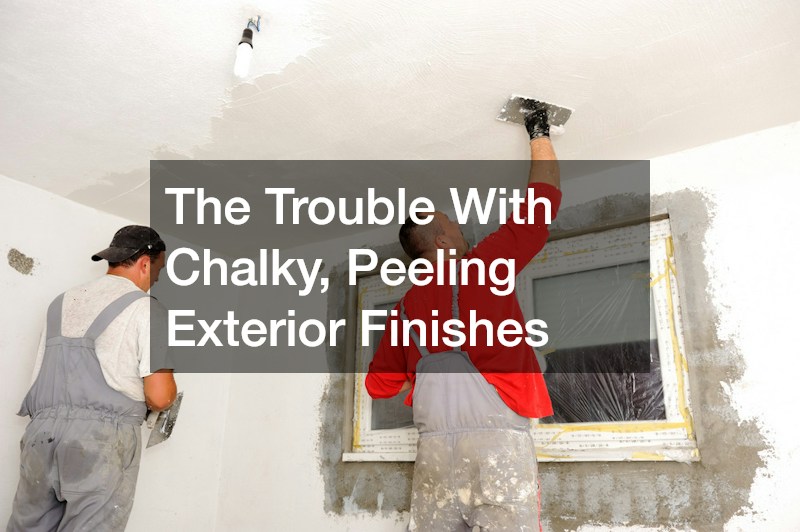
Exterior coatings break down under ultraviolet light, rain, and temperature swings. The binder degrades, leaving a chalky residue that rubs off on hands and prevents new coatings from bonding. Moisture trapped behind the film causes blistering and peeling, exposing bare wood to water, which leads to swelling, cracking, and rot. Faded and flaking surfaces also make a house look neglected, lowering curb appeal and value.
Skilled local painters know that the finish is only as good as the preparation beneath it. Surfaces are washed with a mildewcide solution and rinsed thoroughly to remove chalk, dirt, and mildew. Loose coatings are scraped and sanded to feather the edges, and rotted wood is replaced. Bare wood is spot-primed, and gaps around trim and windows are sealed with elastomeric caulk. Two coats of high-quality acrylic exterior finish are applied within the manufacturer’s recommended temperature and humidity range for lasting color and protection. Doors and trim receive a satin or semi-gloss finish that resists scuffs and wipes clean easily.
The Trouble With Clogged Channels and Loose Hangers
Drainage channels at the eaves fill quickly with leaves, seeds, twigs, and shingle granules, especially on homes surrounded by mature canopies. Once clogged, they overflow during storms, sending water over the edge and against the siding and foundation. The added weight of debris and standing water pulls hangers loose, causing sections to sag and separate from the fascia, which can rot from constant moisture.
Regular gutter services keep runoff moving away from the house. Crews remove debris by hand, flush channels and downspouts with water to confirm free flow, and clear stubborn clogs in elbows and outlets. Loose or failed hangers are replaced with concealed hangers fastened into rafter tails with structural screws, and sagging sections are rehung to restore proper pitch toward the outlets. Leaking seams are resealed, rotted fascia is replaced, and mesh guards can be added to reduce future cleaning. Downspout extensions or buried drain lines carry water well away from the foundation.
The Trouble With Cracked Plaster and Aging Equipment Pads
A backyard swim area depends on a sound interior finish and reliable equipment to stay clean and inviting. Plaster that cracks, delaminates, or becomes rough and stained allows water to seep into the shell and makes surfaces uncomfortable for swimmers. At the equipment pad, aging pumps, filters, heaters, and valves leak, run inefficiently, and break down, often at the start of swim season when everyone is ready to use the water.
Seasoned local pool contractors inspect the interior finish, tile, coping, and equipment to determine what can be repaired and what should be replaced. Small cracks and delaminated areas are chipped out and patched, while worn plaster is resurfaced with new plaster, quartz aggregate, or pebble finishes after draining and preparing the shell. Old single-speed pumps are replaced with variable-speed models, filters and heaters are upgraded, and leaking valves and unions are repaired so the system runs quietly and efficiently. LED lighting and automation can be added at the same time, letting owners control pumps and lights from a phone.
The Trouble With Tanks That Go Years Without Attention

Onsite wastewater tanks collect solids that bacteria cannot fully break down, and those solids accumulate as sludge and scum layers over time. When a tank goes years without attention, solids eventually flow into the drain field, clogging pipes and soil and preventing effluent from soaking away. Warning signs include slow drains, gurgling pipes, odors, soggy ground, and sewage backups that can cause expensive damage and health hazards.
Scheduling septic pumping every three to five years keeps solids where they belong. Technicians locate and uncover the tank, measure sludge and scum layers, and remove the contents with a vacuum truck. Inlet and outlet baffles are inspected and repaired, and effluent filters are cleaned. The drain field is checked for signs of saturation, and risers can be added to bring lids to grade, making future visits faster and less disruptive to the lawn. Spreading laundry across the week and keeping wipes and grease out of the drains help the system work between service visits.
The Trouble With Dirty Coils and Neglected Drain Lines
Cooling equipment loses efficiency when dirt, pollen, and debris coat the outdoor condenser coil, forcing the compressor to work harder and raising energy bills. Indoors, dust and biological growth on the evaporator coil reduce heat transfer and moisture removal. Condensate drain lines that are never cleaned clog with algae and sludge, causing water to overflow the drain pan and damage ceilings, floors, and walls.
Routine ac maintenance each spring addresses these problems before peak cooling season. Technicians clean condenser coils with a foaming cleaner and rinse them from the inside out, straightening bent fins as they go. Evaporator coils are inspected and cleaned, filters are replaced, and condensate lines are flushed and treated to prevent algae. Refrigerant charge is verified, capacitors and contactors are tested, and electrical connections are tightened so the system cools quietly and efficiently. Temperature split across the indoor coil is measured before the visit ends to confirm full cooling capacity.
The Trouble With Slow Leaks Behind Walls
A leak behind a wall may drip only a few ounces a day, yet over months it can rot framing, ruin drywall and insulation, and feed mold growth. Common sources include corroded supply lines, failing fittings, cracked drain pipes, and leaking shower valves. Signs are often subtle, such as stained baseboards, peeling paint, a musty smell, warped flooring, or a water bill that creeps higher without explanation.
Experienced plumbing companies use acoustic leak detectors, thermal imaging, and moisture meters to locate hidden leaks with minimal demolition. Once found, the source is repaired by replacing corroded pipe sections, fittings, or valves with durable materials such as PEX-A or copper. When multiple leaks point to widespread corrosion, a full repipe may be recommended. Static pressure is checked and regulated to between 50 and 70 psi to reduce stress on pipes, valves, and fittings, and damaged materials are dried and replaced. Smart leak sensors placed near water heaters, sinks, and laundry hookups provide early warnings in the future.
The Trouble With Furnaces That Skip Their Fall Tune-Up

Heating equipment that sits idle all summer can develop problems that appear only when the first cold snap hits. Dust and debris collect on burners and flame sensors, filters clog, and blower motors and belts wear. Without a fall tune-up, these issues lead to noisy operation, short cycling, reduced efficiency, and breakdowns. More seriously, cracked heat exchangers or blocked vents can allow carbon monoxide into the living space.
Annual HVAC Service in the fall prepares heating equipment for months of reliable operation. Technicians replace filters, clean burners and flame sensors, and inspect the heat exchanger for cracks. Gas pressure and combustion are tested with a manometer and analyzer, venting is checked for blockages and proper slope, and safety controls are verified. Blower components are cleaned and lubricated, and thermostats are calibrated so the system delivers steady, quiet warmth. Carbon monoxide alarms on every level are tested as a final safety check.
A house that looks fresh outside and feels comfortable inside reflects steady care on both fronts. Healthy canopies, sound cladding, fresh exterior finishes, and clear drainage channels protect the structure from water, pests, and decay while giving the property a polished appearance. Termite protection keeps the framing strong behind those attractive surfaces, so the beauty on the outside is backed by a solid structure within.
Inside and around the yard, well-maintained heating and cooling equipment, leak-free plumbing, a properly working wastewater system, and a refreshed swim area keep daily life running smoothly. Scheduling exterior projects in mild weather and equipment service before peak seasons helps owners avoid emergencies and get the most from every investment. Tackling water and structural issues before cosmetic upgrades ensures that fresh finishes are not damaged by problems hiding underneath.
Approached as a whole, these improvements create a home that welcomes people from the moment they arrive and keeps them comfortable long after they walk through the door. The exterior earns admiring glances, while the interior offers the quiet, dependable comfort that makes a house feel like home.